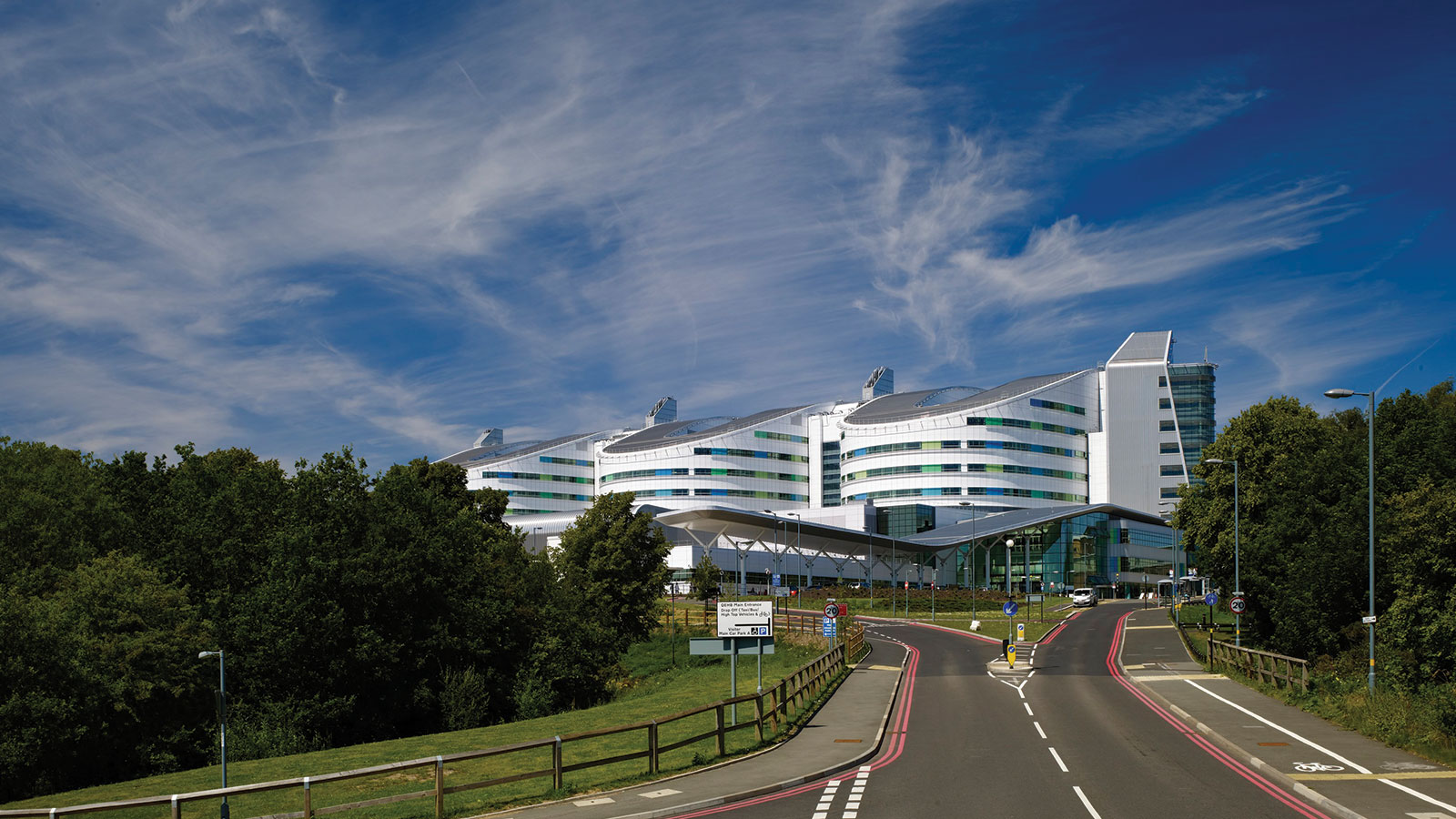
How can AI revolutionize radiology and address critical challenges in healthcare? In this compelling interview, Dr. Aditya Kale, a radiologist and medical algorithmic audit lead at University Hospital Birmingham (UHB), shares his experience leading the largest retrospective study in UK, which was conducted on Sectra’s* ChestLink™ AI solution. From tackling the NHS backlog in chest X-rays to redefining reporting efficiency and patient care, Dr. Kale unveils key findings and offers valuable perspectives on AI’s potential to transform radiology workflows. Dive in to discover the groundbreaking results, lessons learned, and what the future holds for autonomous AI in healthcare.
Q: What inspired your team at Birmingham to evaluate Sectra’s* ChestLink AI solution through this study?
The main inspiration for evaluating ChestLink was the issue of a significant backlog in chest X-rays, a problem prevalent across the NHS. This backlog stems from a substantial workforce gap and a mismatch between the demand for and supply of radiologists. Chest X-rays, despite being one of the most commonly conducted imaging procedures, often get deprioritised, leading to delays in patient care. We were interested in ChestLink’s potential to automate the reporting of chest X-rays that are normal.
Q: Can you share some of the key findings and benefits highlighted by the study?
We were able to gather nearly 200,000 chest X-rays conducted in a single year. Of these, 140,000 were within scope for ChestLink processing, and just over 63,000 were normal studies that could be reported by ChestLink. Within that, just under 15,000 were determined to be high-confidence normals and therefore a report was generated by ChestLink. That amounted to 23.4% of all of the normal scans. If we think of all studies, we’re actually managing to reduce 10.5% of the workload each calendar year. These numbers are pretty significant and I think it has the ability to significantly reduce the radiology department’s workload.

Dr. Aditya Kale, Radiologist and Medical Algorithmic Audit Lead at University Hospital Birmingham (UHB).
Q: Were there any surprising or particularly significant results that stood out during the study?
We were quite surprised and impressed by the sensitivity of the algorithm. From the 140,000 scans that were within scope, there was a discordance rate of only 4%. Following a consultant radiologist’s review of all these scans, that discordance rate dropped to 1%. So, what we’re finding is that ChestLink is only missing 1% of cases that otherwise should be deemed abnormal.
Q: Did the study reveal instances where Sectra’s* AI might have prevented a diagnostic oversight or improved the process of prioritizing cases?
We’re still completing the final part of the study to understand what additional gains there might be over and above reducing the workload for reporting staff. I think there probably will be some gains in the time to report. With autonomous reporting, you can reduce that time lag from, let’s say if it was arbitrarily three days, you can reduce that to a few minutes if you’re using ChestLink.
In terms of prioritisation, if ChestLink is able to analyse these 140,000 scans, it might be able to not only report high-confidence normals, but also triage cases. So, we’d be able to understand which cases should be prioritised, which should be deprioritised.
Q: From your study findings, how do you think Sectra’s* AI could impact reporting times or workflow efficiency?
A: I think ChestLink could impact both reporting time and workflow efficiency. If we look at workflow efficiency, if you have that triage module in addition to the high-confidence normal reporting, you’re going to be able to maximise the time and effort of reporting staff, the radiologists, and radiographers, so they’re looking at scans that might have some pathology.
In terms of time saving, I think that there’s definitely significant gains to be had because at the moment NHS trusts aren’t able to report every single chest X-ray that’s done in a day. Whether or not that will then translate into significantly improved patient outcomes is a different question and that’s probably something that needs further evidence. But in theory, yes, I do think that the prioritisation module could be of significant benefit.
Q: What clinical or operational metrics did you use to evaluate Sectra’s* performance during the study and how did it measure up?
It’s very difficult to provide an accurate benchmark, and this is not just specific to ChestLink. What we’re finding is that it’s very difficult to find the resources and funding to conduct a robust benchmarking study. The approach that we took in this case was to look at a historical data set. We created our data set from 2018. We were looking at the reporting rates that I just mentioned, but we were also looking at the characteristics of the discrepancies.
So, if there was a discrepancy between the ChestLink report and the report that was written by UHB staff back in 2018, then we would actually do more of a deep dive into those cases. We are currently in the process of modelling what would have happened if ChestLink were to miss a certain diagnosis.